“YOU KNOW WHAT, THIS IS LIFE — DO NOT EXPECT A STORMLESS SEA. AND
IF YOU ARE SINKING, THE FAULT IS YOURS,
NOT THE STORM'S, FOR THE STORM IS THE SEA.
WHERE IS YOUR ANCHOR? YOUR ANCHOR!”
“METSAMOR”
These were the last weeks, and we almost knew that he had planned the final ritual of his earthly life: to say farewell to tree and grass, stone and water, whose genealogy he could trace and whose mystical way of living he could express. In nature he became Himself: no longer the silent, withdrawn knot of nerves of the lukewarm city, but a cosmic man, marvellously in harmony with the last colours and sounds of the last autumn of his life as a Patriarch. Another lesson in speech and presence, while the fading grass grew cold with cruel speed and the fire burned reluctantly. There was a sorrowful pride in being close to him at that moment, closer to his untroubled bearing, which would not disappear afterwards either, but would return in other forms — word, thought, spirit — each time reaffirming its endurance and testing our capacity for attentiveness, because the mission of giving life a new meaning is granted only to the chosen.
(One could have lowered what needed saying to the level of memoir: “Once, with the Master...” One could have got off cheaply, pompously telling fragmentary stories and making no attempt to approach true greatness, with the traditional, national knack of smallness for evasion and inflicting pain. But this too is a task He silently bequeathed: one must not!)
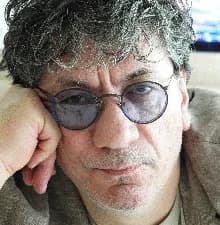
So: Himself. The Master. Hrant Matevossian.
His ability to foresee situations — more precisely, the spiritual atmosphere — is astonishing. It was He who, years earlier, had seen our soul with dread while deciphering another's. Then the homeland grew so “strong” that the biceps defeated the brain, boots entered the school, our mother tongue, conduct and customs were distorted beyond recognition, and, in his own conviction, we as a nation wrote the disgraceful script of “October 27”. Finally to possess Hrant Matevossian's golden Armenian and officially speak some pimp's jargon; to have the opportunity to see an all-divine depth through his eyes and remain so lame and maimed; voluntarily, like the lowest drunkard, turn life into satire. He knew all this; He saw it with horror and foretold worse to those who would not listen. For a country is a living organism, not a handful of sand slipping between one's fingers. The Country is us, and perhaps to save it once again we needed more will and courage, more concern than ever, and more intelligence than ever. Or: “Are we incapable of devotion?” He said it. “Or was the blood we shed in so many world wars not our own blood, but tribute to the Caesars? Or were our sacrifices to the last drop merely our tributes as subjects to foreign rulers? Or were the manifestations of our splendid human gifts in the palaces of other ages and countries displays of talent before those who ruled us?” He wrote it. Thus the question is put sharply and like a man: are you a ruler or a subject? Or even, in Christian terms: are you a master? Is it surprising that both the one who appreciated our Master — our kin by blood — and the one who understood him were foreigners? Charents taught us no lesson, and the foaming-mouthed foundling, with its age-old, inexplicable malice, once again poisoned — tried to poison — Hrant Matevossian. But had He instinctively chosen the right path, or had the right path found him? The furious barking was there and is there still: see what perfection the one pan-Armenian brand attains — tearing the good apart. The last desperate attempt of the famished phalanx was its futile struggle to make him disown his own, but He stood firm, because he knew that one does not disown a brother, and that the paper on one's desk must be clean and the pen unwavering.
And thank God that in his vehemence He was a good Samaritan, and in his apparent fragility, unbreakable by nature. If a writer was needed, He became one; if a speaker of truth was needed, He became one; and if a victim was needed, once again He became one. A victim of our incompleteness and shallow thinking. Now He is physically absent — that sobering presence is gone — and that infinitely meaningful place, that chapel, has been turned into a desert by neuroparalytic riffraff, who instead filled it with the rubbish of self-satisfaction and dubious literacy. For the true Master — the Khazeyin — is absent, and now they are masterless, a new species of cynanthropy wearing the traitor's red armband.
It would be naive to think that Saroyan was merely displaying his inherited Armenianness when he said: “My writings will be read again and again.” Great people, glorious people, know their worth well. He too knew (“...but you will be left without a master. I fear you will be left like a sheep that has lost its shepherd and will be eaten by the wolf”), and He too knew the worth of what he had created. For where else do the thousand-year lamentation and weariness end, and the courage to look proudly at the great world begin? The writing — penetrating; the thought — proud; the potential — immeasurable.
But if we are not to dissolve irreversibly into today's chaos, we must be convinced that sound judgement is, ultimately, close to light and halo — this is no territory for the brigand, the church clerk, the schoolmaster or the concubine — just as Hrant Matevossian was so close to them: in pen, speech and identity.
And He won. “He won,” as he once wrote about Saroyan, “won and stood beside his brothers who had also won — Saroyan, Charents, Khachaturian, Tamanyan...” For where He dwelt, and still dwells, death has neither territory nor dominion. In his new, still possible realm, in the still possible homeland, Hrant Matevossian's brave people will be baptised through an awakening at the brink: the people of his sons, unalloyed and unique.